Twenty years ago, the annual report was a prestigious design project. Agencies cleared their spring calendars for it, with bespoke photoshoots, advanced print techniques, and carefully chosen paper stocks. It wasn’t just a report – it was a statement.
Today, most reports live online, downloaded as PDFs, skimmed on screens, and often forgotten. And yet, the strategic potential of the annual report has never been higher.
Beyond Numbers: The Annual Report as a Trust Platform
The annual report is no longer just a financial document. It is a trust document.
Brands are evaluated on far more than products and prices. Stakeholders want to understand:
- Who you are
- What you stand for
- How you operate
- What role you play in society
With ESG regulations, sustainability standards, and growing public scrutiny, how a company operates is as important as what it earns. The annual report is often the only place where this full story is presented in one unified, credible format.
Unlike campaigns, advertising, or social media, the annual report carries weight. It is formal, comprehensive, and expected to be truthful. According to global trust studies, transparency and corporate behaviour are now among the strongest drivers of brand credibility. And investors are no longer the only audience. Modern reports are read – or referenced – by employees, job seekers, customers, partners, journalists, authorities, and the public. Not everyone reads it cover to cover – but everyone reads into it.
Trust is now the most important asset in business.
What defines a good annual report today? Let’s explore some of the most significant shifts shaping reporting practices:
Show, Don’t Just Signal: Authentic Sustainability
For years, sustainability in reports relied on symbols: leaves, green gradients, and generic imagery. That is no longer enough. Stakeholders expect evidence, not decoration – as demonstrated by Elkem’s 2024 annual report, which won silver in the “Best Sustainability Report” category at the Farmand Award (Norwegian: Farmandprisen).
Top reports now demonstrate real action with concrete data and measurable impact. Instead of a generic sustainability spread, show three quantified commitments and year-on-year progress in plain language. Brands that rely solely on visual cues risk appearing outdated or untrustworthy.
Making Governance Meaningful
Boards and leadership teams are no longer presented as mere grids of portraits. Modern reports explain why each individual matters:
- What skills and experience they bring
- How they align with company strategy
- How they contribute to value creation
This approach turns static pages into meaningful insights about governance, leadership, and decision-making. Oncoinvent’s 2024 annual report is a good example of clear and purposeful leadership presentation – a project we had the pleasure of designing.
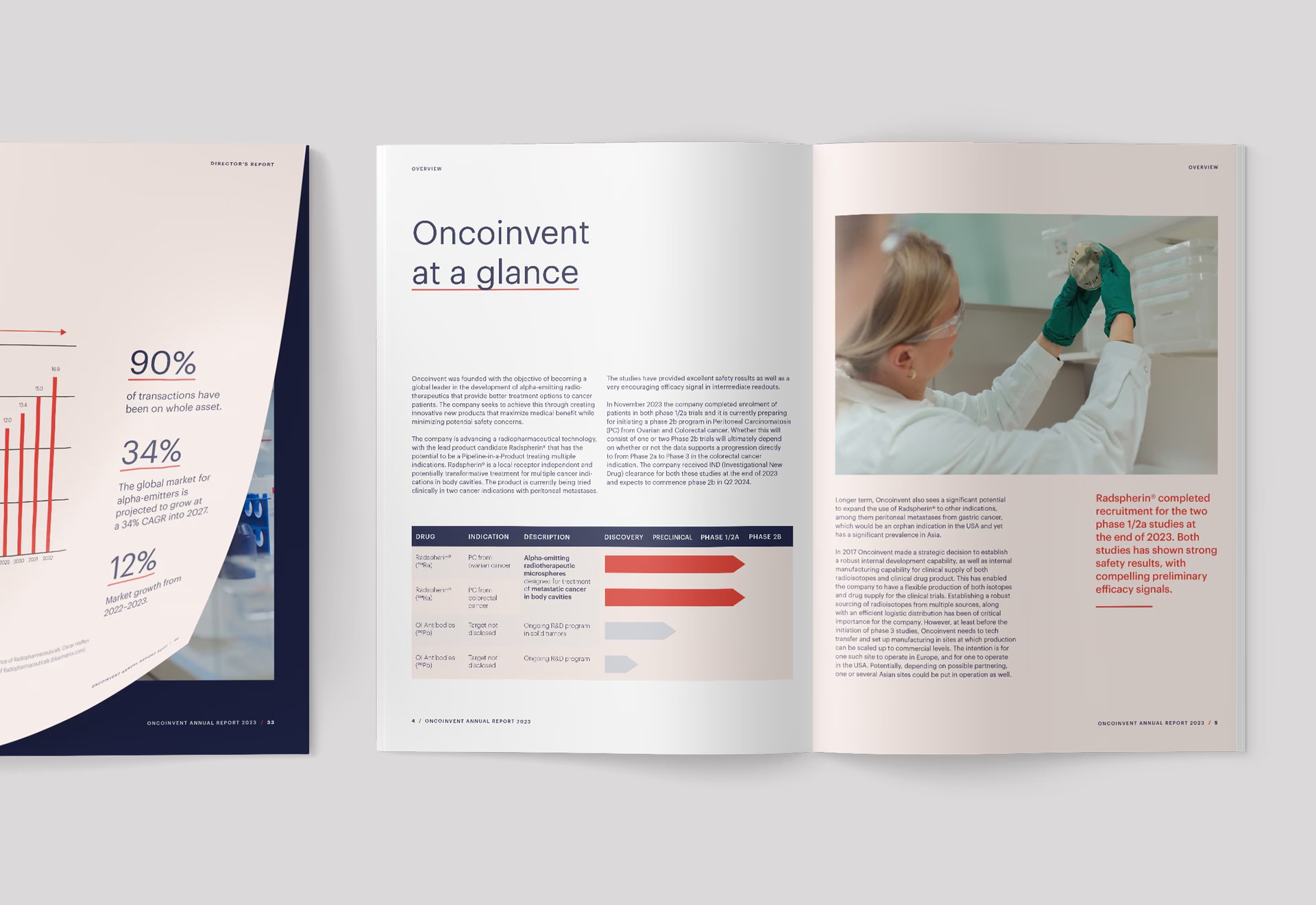
We designed Oncoinvent’s annual reports (2023 / 2024). Their brand colors – blue, red, and light pink – are used consistently throughout to reinforce the visual identity.
Editorial Thinking at Scale: Storytelling That Works
Editorial design has always been part of strong reports, but today the ambition is higher. Reports are longer, more complex, and more narrative-driven.
The best reports borrow from journalism, with:
- Clear narrative arcs
- Sections with a defined purpose
- Pull quotes and highlights
- Strong hierarchies in content
- A rhythm between data and storytelling
Digital reports and PDFs are also content-heavy. The challenge is not access — it’s navigation, prioritisation, and readability. A modern report must feel curated, not compiled. The Swedish bank SEB’s reporting is a strong example of this approach.
Dual Versions: Quick Insights and Full Transparency
Many organisations now produce two versions:
- A full, regulatory report
- A shorter, curated highlight version
The short version acts as a front door, offering context, key insights, and an overview, while the full report remains the definitive reference. AF Gruppen is a strong example of this approach, with a concise digital overview supported by a complete PDF version for deeper insight. This reflects how readers consume content today: first overview, then depth.
Extend the Life of Your Report
An annual report shouldn’t stop at publication. When used actively, it becomes a valuable source of content across multiple channels.
Key stories, results, and insights from the report can be:
- shared as articles or updates on your website and LinkedIn
- visualised as simple graphics highlighting key figures and progress
- reused in newsletters, presentations, and sales material
- used as a downloadable resource for stakeholders who want depth
- discussed in talks, webinars, or internal presentations
Because the annual report is formal, verified, and credible, the content carries more weight than most other communication. By breaking it down and reusing it over time, companies extend the life of the report – and strengthen consistency, visibility, and trust across all touchpoints.

We have developed the annual reports for RVO BA & HRR annually since 2013, with the reports transitioning to digital formats in 2016.
Built on Real Experience
Over the years, we’ve designed and developed annual reports for a wide range of companies – both digital and print.
Case: RVO
RVO wanted more accessible, user-friendly reports. We shifted from static PDFs to digital-first reports, improving navigation, flexibility, and readability. Printed reports were still produced but in smaller volumes. The result: 60% reduction in print, lower costs, improved stakeholder engagement, and a smaller environmental footprint.
We managed art direction, design, and development across formats, ensuring visual consistency with RVO’s brand identity. This combination of strategy, design, and execution is how we approach every report – tailored to tangible business outcomes, not trends.
From Obligation to Opportunity
The future of reporting isn’t about removing structure – it’s about making structure work harder. Strong reports clarify complexity, turn data into insight, and compliance into strategic communication.
Today’s annual reports are more than documents: they are brand statements, engagement tools, and platforms for trust.
Sources & further reading
- EU Commission – Corporate Sustainability Reporting Directive (CSRD)
- Edelman Trust Barometer
- KPMG Survey of Corporate Reporting